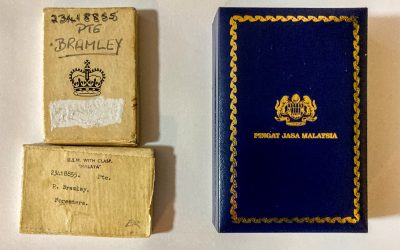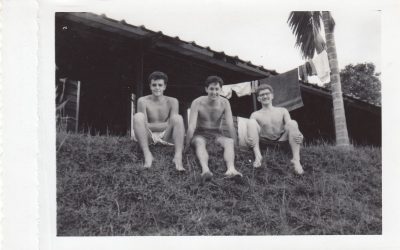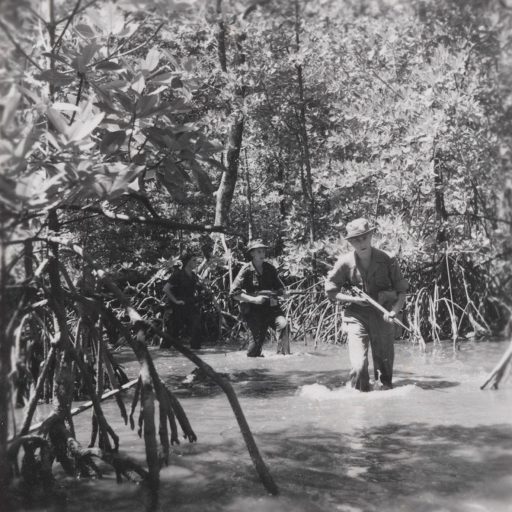
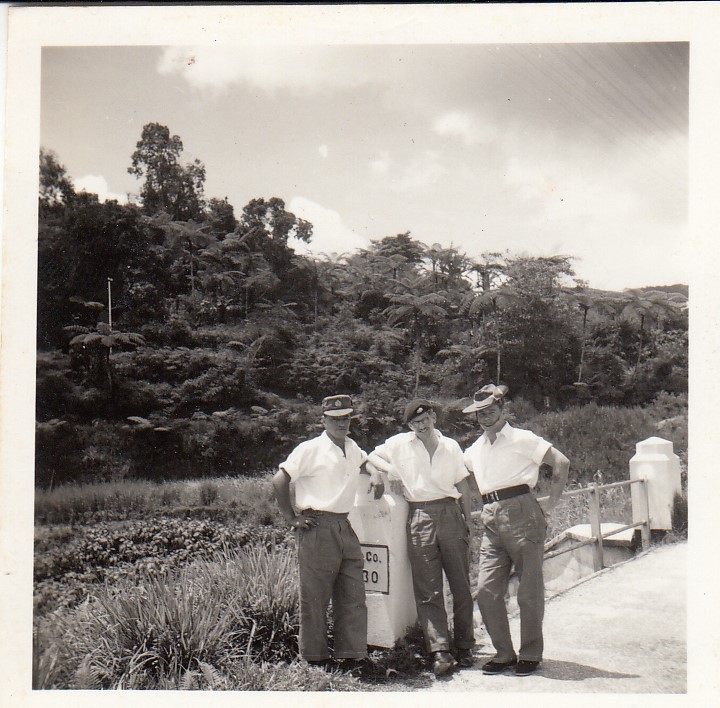
November the eleventh is a solemn day of remembrance for those who lost their lives in war. It marks the anniversary of the Armistice that ended fighting with Germany in World War I (WWI). Not only does the day commemorate those lost in the ‘Great War’ and World War II that followed but also those who lost their lives in lesser-known wars. However, as a Malaya vet I am underwhelmed by the lack of recognition of those who served in Malaya.
Among these are the Korean War, often referred to as Australia’s ‘Forgotten War.’ The 75th anniversary of the Korean War was commemorated in June this year. Also commemorated this year on 31 August was the 75th anniversary of Australia’s engagement in the ‘Malayan Emergency.’
If Korea is Australia’s ‘Forgotten War’ then, surely, the Malayan Emergency, along with ‘Konfrotasi’ in Borneo, must surely rank as Australia’s ‘Unknown Wars.’ In both cases, war was never officially declared, yet, arguably, these two conflicts have resulted in the most successful outcomes of any of the post-World War II conflicts in which Australia has been engaged.
The Malayan Emergency: successful outcomes
Malaya was one of the South-East Asian nations that experienced a huge power vacuum following the surrender of the Japanese in 1945. As Britain, France and the Netherlands attempted to reassert control of their former colonies in Malaya, Indonesia, Indo-China, and the Philippines, they faced strong resistance from nationalist and communist groups striving for control and independence.
In Malaya and Singapore, Australia’s contribution to British Commonwealth Forces during the Malayan Emergency was crucially important in enabling Malaya to achieve independence in 1957. It was also critical for establishing Singapore internal self-government in 1959, even before the conclusion of the ‘Emergency’ in 1960.
Later, in Sabah and Sarawak, Australian military support during ‘Konfrontasi’ contributed to the successful integration of Sabah and Sarawak into the Federation of Malaysia in 1963. This was done in the face of Indonesia’s counter claim of sovereignty over North Borneo. During these two wars, Australia suffered a total of 61 fatalities (39 in Malaya and 23 in Borneo).
Since that time, notwithstanding ethnic tensions resulting in race riots in 1969, and renewed communist insurgencies from 1969 until 1989 when a peace accord was signed, Malaysia has established a complex ethno-political power-sharing system and become a prosperous democratic country. Of all South East Asian nations, Malaysia ranks third behind Singapore and Brunei in GDP per capita. It is fourth behind Singapore Brunei and Laos in terms of political stability. However, Laos, it must be said, is a communist one-party state.
Outcomes of the Korean conflict
In contrast, Australia’ contribution to conflicts in other South East and North Asian nations formerly occupied by the Japanese have been more costly in terms of lives lost, and have had less successful outcomes. Korea, prior to World War II had been a Japanese colony for 35 years. The Soviet Union and the United States divided the country into two occupation zones at the 38th parallel, with plans for a future independent state. Increasing conflict between the Communist north (DPKR) and the democratic south (ROK) led to the outbreak of war after the DPKR invaded South Korea in 1950.
Following a brutal war in which 1,100 Australians were killed in three years, an Armistice was declared in 1953, but no peace treaty has ever been signed. The two countries remain divided by the DMZ (Demilitarised Zone) which is arguably the most heavily fortified border in the world. While the ROK has become an economically successful democracy, the DPKR has become a nuclear-armed ‘hermit kingdom’ under the repressive Kim dynasty. This is a far from successful outcome.
The Vietnam war: partially successful
Australia’s other post-World War II involvement in South East Asia was in the former French colony of Vietnam. In March 1954, France was defeated by the communist-led Viet Minh, under Ho Chi Minh, at the Battle of Dien Bien Phu. After this, Vietnam was temporarily divided into a communist North and a non-communist South. A planned 1956 election was intended to reunify the country. Supported by the USA, the South refused to hold the planned elections. This lead initially to guerrilla warfare and ultimately a full-scale war (the Vietnam or American War).
Australia’s involvement in this war, which ended in victory for the North Vietnamese with the fall of Saigon in 1975, cost 523 Australian lives. Now unified under a one-party communist system, Vietnam is experiencing rapid economic growth. However, there are still severe restrictions on political rights, civil liberties, and freedom of expression.
Iraq War and the war in Afganistan
Other post-World War II conflicts in which Australia has participated, namely the Iraq War and the war in Afghanistan, have had far from successful outcomes. Lasting eight years, the war in Iraq aimed at toppling Saddam Hussein’s regime and destroying the regime’s weapons of mass destruction (WMDs). However, WMDs were never found, the conflict caused massive casualties, and led to regional instability and the rise of insurgent groups like ISIS.
Similarly, Australia’s 20 year engagement in the Afghanistan War following the 9/11 attacks on New York and Washinton, DC, lasted even longer than the ‘Emergency.’ In addition it cost 41 Australian lives, and achieved little more than the restoration of Taliban control over Afghanistan – a far from successful outcome.
Australia’s unknown wars are our most successful involvements
By any measure, the post-independence development of Malaysia and Singapore must surely be judged a success. Whether it be how few Australians were killed in these campaigns, or the relative political stability with free and fair elections, or economic growth since independence, this can’t be denied.
Australia played no small part in securing these outcomes. Therefore, as a veteran of the Malayan Emergency, I am perplexed as to why these campaigns are so little known. Even in the Australian War Memorial (AWM), one of the most evocative places I have visited, the Malayan display to my eyes is totally underwhelming.
I have lobbied personally and through my federal member for a commemoration service to mark the 75th anniversary of Australia’s engagement in the ‘Emergency.’ Yet, I only discovered the commemoration service at Rond Terrace on 31 August (Malaya and Borneo Veterans Day) was actually happening from the television program for that week. I regularly monitor the AWM website. I read the August 2025 edition of Vetaffairs. Yet, I found no reference to this service.
Judging by how few veterans got to their feet when asked to stand at the service, I’d guess that, like me, few other Malaya vets were even aware of the event. Lest we forget, indeed!